Skip to content
About
Search
Open mobile menu
Close mobile menu
Search
Close search
Google
Gene Munster, Brian Baker
Google’s Capex Guide Stings a Cloud Blowout
Google’s June quarter should have worked. Cloud revenue was up 82% y/y versus the Street at 63%. My first reaction was the stock should be up 5%. Instead, shares fell 7% in the two trading days following the print compared to the Nasdaq down 3%. The reason is investors are still stuck on the same two issues: capex and cloud margins. The company raised CY26 capex expectations by about 7% relative to the Street's and said significant investment will continue. On top of that, cloud margins are likely to decline in the back half of the year as Google uses third-party capacity to meet demand. My take is the capex and margin concerns are real near-term, but the more important point is that cloud demand is still running well ahead of supply.
Read more
Google
Gene Munster, Brian Baker
AI Trade Quarterly Preview: Capex & Cloud Results Should Move Us Higher
The framework for assessing the health of the AI trade has become a well-traveled road, centered on Cloud and capex outlook. Both carry equal weight in the conversation. We expect consensus CY27 hyperscaler capex growth estimates to increase from the current 23% y/y to 37%. As for Cloud, we expect upside in June for Google Cloud and AWS growth, and an in-line print for Azure. The bigger question is less about the magnitude of the upside and more about whether investors will reward the AI trade based on the improved outlook. My sense is yes, given these higher expectations should drive AI infrastructure earnings growth that more than offsets multiple compression related to the law of large numbers. P.S. Oracle, the emerging cloud entrant with 4% market share, won't report its August quarter until mid-September.
Read more
Amazon
,
Google
,
Meta
,
Microsoft
Gene Munster, Brian Baker
Google’s Golden Goose Is Becoming an AI Agent Platform
Google Search has been under threat ever since AI chatbots changed how people discover information late in 2022. That matters because Search drives about 55% of the company's revenue. At Google's I/O 2026 developer conference this week, it was clear that Google has solved for the chatbot headwind. The company is increasingly turning Search into an AI-native action layer, with agents, commerce rails, and subscriptions. All that means that Search can continue to grow at 10% plus for the next few years (compared to 19% in March, and around 11% on average over the past three years).
Read more
Google
Gene Munster, Brian Baker
Google Earnings Underscore We’re Still Early in AI
Despite Cloud and Search revenue blowing past expectations, shares of GOOG traded down about 2% in after-hours trading. The disconnect appears driven by optics around a much larger-than-expected CY26 capex ramp, a sharp step-up in depreciation, and some perceived variability in near-term cloud growth tied to supply. Google and Meta are the two best examples of companies translating AI tech into better-than-expected revenue growth. Lastly, that huge step up in capex spend this year underscores we're still early in AI.
Read more
Google
Gene Munster, Brian Baker
Google Increasing Ads in AI Suggests Upside to December and 2026
Over the past three months, shares of GOOG are up 31% vs the Nasdaq up 4%, as Google’s technical chops in AI have been validated. Strengthening AI products have translated into higher Street expectations for Search growth in December, increasing from 12% two months ago to 14%. I believe the segment will end the quarter up 15% based on our survey of sponsored ads within AI Overviews and AI Mode. That upside should flow into CY26, and provide further upside.
Read more
Google
Gene Munster, Brian Baker
2025 Was the Year of the Robotaxi: Where Do We Stand Today?
A lot happened in 2025 when it comes to robotaxis, which makes it fitting to mark where things stand today between Waymo and Tesla. This year, Waymo moved beyond the pilot phase and entered the scaling phase, with a fully driverless service operating in five US cities and a fleet of around 2.5k vehicles. Tesla’s Robotaxi is running a fleet of around 50 vehicles, largely supervised in Austin and the Bay Area. While Waymo has the lead, the market remains nascent, likely exiting 2026 with about 1% of rides in the US, which means Tesla has plenty of time to catch up. For 2026, it will all come down to how the no safety driver Austin test goes. If that goes well, look out Waymo.
Read more
Autonomous Vehicles
,
Google
,
Tesla
Gene Munster, Brian Baker
Pricing History of Paid Consumer Apps Is Good Long-Term News for Chatbots
One nagging question around AI is what the long-term business models will look like and whether these companies will be able to charge enough to become profitable. We looked at the ten most popular paid consumer subscription apps to get a better sense of historical pricing power. On average, their prices have increased 1.7% faster per year than the rate of inflation. The bottom line: this is good news for ChatGPT, Grok, Gemini, Claude and Perplexity, because it shows that if you get consumers hooked, you can gradually start raising prices.
Read more
Artificial Intelligence
,
Google
,
Netflix
,
OpenAI
,
Twitter
Gene Munster, Brian Baker
Our Study Finds More Ads in AI Overviews
Google’s AI strategy appears to be working in Search. In our 200-query check, ad presence within AI Overviews became more common over the past two months. We still haven’t seen ads in AI Mode, even though the company has been clear that those are being tested. This aligns with management’s commentary that higher query volume has positively impacted Search revenue. Bottom line: Google is likely to post a strong quarter in Search and continue guiding investors that it’s successfully navigating the AI transition. Street expectations for September have risen, with the whisper number now calling for 13% Search growth, up from 12% in print and 11.7% in June.
Read more
Google
Gene Munster, Brian Baker
5 Key Pressure Points for Mag 7 Earnings – Plus an NVDA Bonus
Here are the five pressure points for this Wednesday and Thursday’s earnings from Google, Meta, Microsoft, Amazon, and Apple (and an Nvidia bonus). Big picture: The setup carries more risk than it did three months ago, as investor confidence is notably higher heading into this round of reports. That said, the key takeaway will likely remain that we are still in the early stages of AI adoption, and the largest technology companies continue to hold their ground.
Read more
Amazon
,
Apple
,
Google
,
Meta
,
Microsoft
,
Nvidia
Gene Munster, Brian Baker
OpenAI Sends Chrome a Wake-Up Call; Google Has the Tools to Answer
OpenAI announced Atlas, their first browser. The product is built on familiar tabs, which will make it inviting to Chrome users, and delivers a step-function improvement in functionality, with better personalization and agents. While there was no mention of monetizing search, the long-term impact of OpenAI on Google’s cash cow remains an open question. In the end, Atlas sets a new bar, one that Google will likely be able to meet, which is central to maintaining and growing their search business.
Read more
Google
,
OpenAI
Gene Munster, Brian Baker
Head of Google Search Sends Reassuring Message Before Earnings
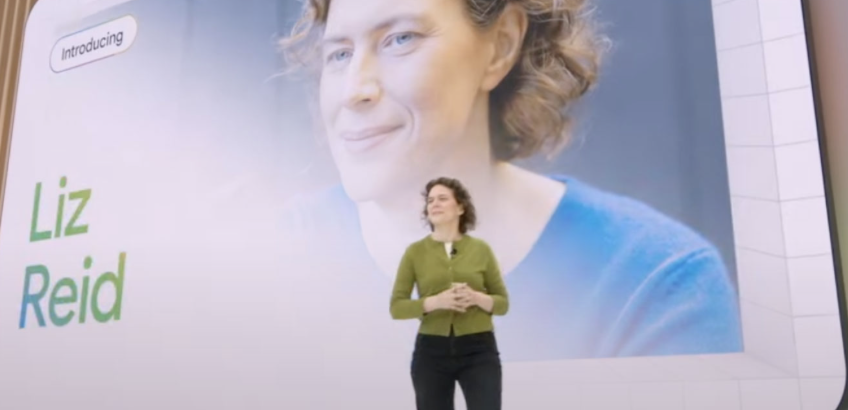
Last Friday, Liz Reid, head of Google Search, joined the WSJ’s 'Bold Names' podcast. In a vacuum, it would have been a non-event. In the context of investor fears around Google Search being displaced by generative AI, and the proximity of her comments to Google reporting September results (Oct 29), the podcast took on new meaning. Her message was simple: AI has been a positive for Google’s search business. Search accounts for just over half of revenue, and I estimate close to 75% of profits. Even though shares of GOOG are up 33% over the past three months (Nasdaq up 9%), the stock still trades at a 15% discount to other Mag 7 comps.
Read more
Google
Gene Munster, Brian Baker
Ahead of the EV Tax Credit Sunset, Big Auto Faces an EV-Autonomy Catch-22
At the end of the month, the U.S. EV tax credit will sunset, which may explain why in August Ford and GM reset their EV plans and in September VW cut its U.S. 2030 EV target to 20%, down from 50% three years ago. This tempered EV outlook contrasts with increasing investments into autonomy, pushing these companies into a Catch-22: saving money by slowing the path to electrification dampens the autonomy reward.
Read more
Autonomous Vehicles
,
Google
,
Ridesharing
,
Tesla
Load More
Back To Top
Search