
Skip to content
The iPhone Air Didn’t Land, but the iPhone Took Off Thanks to 2021 Upgraders
Apple
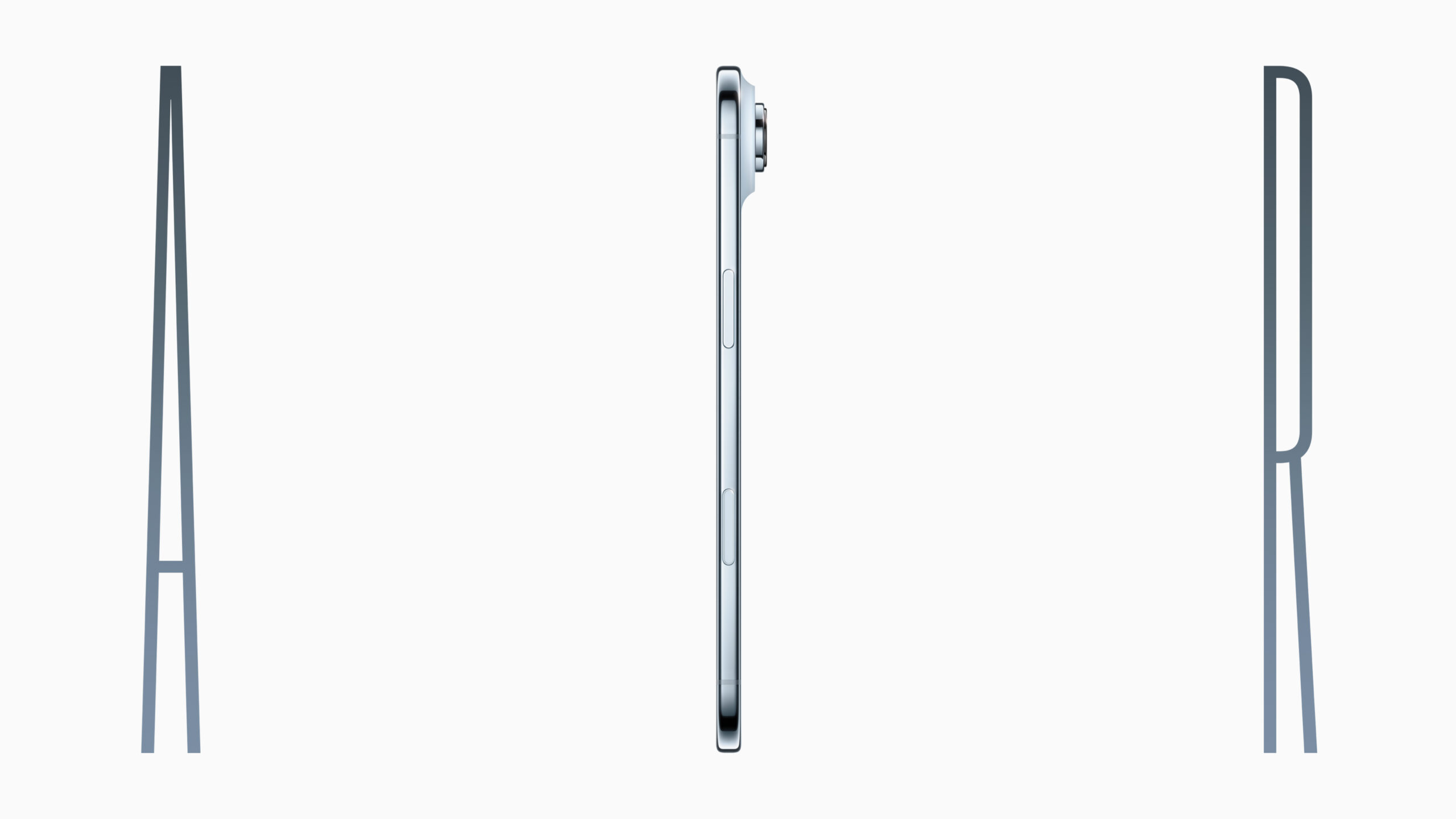
It's becoming more clear that demand for the new iPhone Air is soft. Recent third party estimates suggest the new form factor accounts for around 5% of iPhone sales. Before it went on sale, I and the Street had estimated it would account for 15% of sales. Despite that headwind, the iPhone is growing at its fastest rate in four years, largely thanks to a massive upgrade pool showing up, albeit nine months late.

Key Takeaways

The iPhone Air missed the mark. While Apple doesn't break out sales by model, third party data suggests it accounts for between 3% and 5% of unit sales, below the 15% most investors had expected.
Even with weak Air results, iPhone has lifted its growth from flat in recent years to solid double digits.
The success of the iPhone 17 cycle sets up challenging comps for the 18 cycle. The Street is expecting 9% iPhone growth in FY26, declining to 5% in FY27.
1

The Air

Back on September 9, when the new iPhones were launched, I wrote that what matters most is form factor and Apple successfully landed two winners, the Air and the new Pro models. Turns out, I was wrong on the Air.  Third party survey data and supply chain reports suggest the Air accounts for around 5% of total unit sales.

The reason I missed it was that historically a new form factor matters. Looking back, iPhone sales have seen a bump following meaningful changes in design. This year we got two, the Pro and the Air. Together, I thought in September these models should account for about 70% of iPhone revenue, with 55% being the Pro.

Despite Apple positioning the Air as a Pro level device, it has noticeable gaps in camera features and battery life. Yes, its aesthetics are impressive, but the functionality still lags the Pro line.

What matters most is that both the Air and Pro introduced eye catching new hardware designs. New hardware designs have typically boosted revenue growth. When the iPhone 6 and 6 Plus launched in 2014 with larger 4.7 inch and 5.5 inch displays compared to the iPhone 5’s 4 inch display, it powered a super cycle. iPhone revenue in FY14, the iPhone 5 cycle, grew 12% y/y. The 6 and 6 Plus drove revenue up 52% in FY15.
2

The Upgrade Cycle Is Showing Up

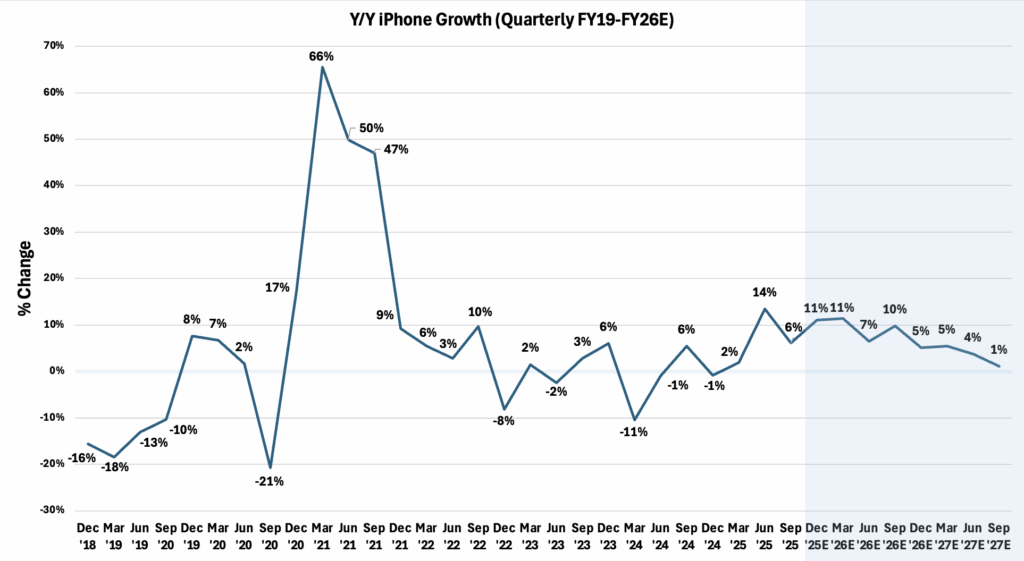
Rewinding to fall of 2024, I was optimistic that iPhone could grow in FY25 by 8% to 10% after being flat for the previous two years based on Apple Intelligence and the large upgrade pool from FY21 that was ripe for upgrading. In FY21, iPhone sales grew 39% compared to down 3% in FY20 and down 14% in FY19. The first three quarters of the iPhone 16 cycle saw iPhone grow 2% y/y. I attributed the lackluster performance to Apple Intelligence’s disappointing utility, removing the most exciting feature around the iPhone 16 cycle.

Then we got a surprise. In June of this year, in the final quarter of the 16 cycle, iPhone revenue took off, up 14% y/y. The company noted on its earnings call that a couple percent of that growth was a pull forward of demand given uncertainty around the impact of tariffs on future iPhone prices. Making that adjustment, the iPhone still grew 12% y/y compared to up 2% in March and down 1% in December 2024.

As a point of reference, on average the June quarter y/y growth is 0.3% lower than the March quarter from FY14 to FY24. In the June quarter of this year, backing out the tariff pull forward benefit, iPhone growth rates increased by 10%. That momentum carried into the September quarter with iPhone sales up 6% despite a lack of supply that pushed sales into the December quarter. It’s important to keep in mind that the 6% growth in September and December guide calling for around 11% growth included the headwind of disappointing Air sales.

Putting it together, it is reasonable to conclude that part of the strength we are seeing in the current iPhone 17 cycle has been driven by upgrades from FY21. The chart below illustrates the upgrade wave hitting this year:

3

An Early Read on iPhone in FY27

The conversation about the strength of the iPhone next year should be balanced with what that means for the out year, 2027. The bad news is the strength of the iPhone 17 cycle raises the bar for the 18 cycle in FY27. If I’m right that upgrades are playing a big role in FY26 iPhone demand, a year from now that upgrade pool will begin to lose momentum. This translates to the iPhone in FY26 should be up 10% compared to an average growth of 1.5% in FY22 through FY24. The bottom line: the upgrade pool creates a difficult comp for FY27.

Next Fall, it is rumored that Apple will come out with another new form factor, a foldable phone. I put the odds of that at less than 25%. Even if a foldable phone did come out next fall, which would be a material catalyst for form factor buyers, I don’t think supply would ramp fast enough to move the needle. More importantly, the Air’s performance to date was a reminder to me that while the form factor punch is a wild card, the upgrade muscle is strengthening.

Disclaimer

Back To Top