

The September numbers and earnings call were largely uneventful with a slight negative around some recalibration investors will be making on the timing of unsupervised Robotaxi and FSD. The big picture remains intact: Tesla is the best-positioned company for AI in the real world, has large markets to go after (FSD, Robotaxi, Optimus), and plenty of cash to invest to get there. As for Elon, he remains fully engaged, and made the case for his upcoming pay package vote.
Key Takeaways:
1. Austin: Tesla is making the right decision to move cautiously in Austin. Shares of TSLA traded down following Elon’s comment that he remains paranoid about the safety of Robotaxi given any accidents would represent a significant step back in terms of the public’s confidence in the fleet. The net is that he now expects Austin to have some areas at the end of the year that don’t have safety drivers, most likely limited to local streets where the risk of a significant accident is lower because speeds are slower.
My take: While some investors were hoping to hear that the driver would soon be removed, I believe the company is making the right call to slow play the rollout given what’s at risk. Additionally, the company did not give any updates on the number of vehicles in the Austin fleet. I believe it’s somewhere between 20-40.
2. Robotaxi Expansion: Expanding Robotaxi to 8-10 new metro areas by the end of the year. This is a new datapoint and is in line with previous comments to expect 20-23 cities by the end of 2026.
My take: It’s clear they are pushing Robotaxi training, which is a sign that they don’t want to let up on the long-term opportunity.
3. Plenty of Cash to Invest: The company has $41B in cash and equivalents, more than enough to fund development into Robotaxi, FSD, Optimus, and increased production.
My take: This is the most important update from the earnings. They have enough cash to will Elon’s vision into reality. It may take a lot longer than many expect, but they’ve got the cash to get there.
4. The More Affordable Model: The more affordable model is the lower-priced Model Y and Model 3. In the shareholder deck, the company referred to more affordable models as Model Y and Model 3.
My take: That’s what I was expecting, and I was hoping to be surprised that they were going for the $25k starting price. In the end, the 10% lowered price is a move in the right direction and good for margins.
5. Margins: Margins improved quarter over quarter. Auto gross margins ex credits were at 15.4% compared to 15% in June and 12.5% in March.
My take: While it was a miss versus the Street that was looking for 15.6%, it was close enough and still up from June. Going forward, I expect them to remain around this level through the end of 2026.
6. Next Year Deliveries: Not much guidance on deliveries for next year. The Street is looking for deliveries to be up 17% next year compared to down about 10% this year. Elon did outline that they want to increase production as fast as they can, which could be read as a positive demand indicator for next year. That said, he clarified that production would be ramping over the next 24 months.
My take: The 24-month comment threw me off and left me feeling like we did not get much on the delivery outlook. The good news is they did not talk about next year being a “transition” year like they talked about this year, which leans positive. In the end, the in-print delivery growth outlook of 17% is too high, and the whisper number of up 10% is more in the ballpark. I’m at up 5%.
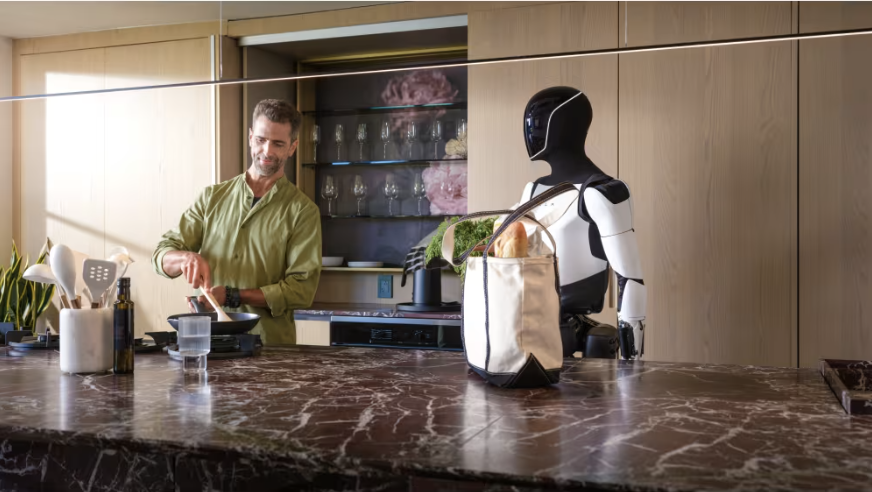
7. Optimus: Last quarter the comments on Optimus were all high level, with expectations of selling 1 million units a year in five years. We got a little more clarity this quarter, with expectations that we will see the new Version 3 in February or March and “hope” in production by the end of the year. He talked about long-term selling 10 million Version 4 and 50-100 million Version 5.
My take: Investors like to hear about Optimus and put little weight into it becoming reality, which means it’s not reflected in the stock. As a point of reference, if they sell 5 million units a year at $25k each in 10 years, that would add $125B in revenue, which would effectively double the size of the business today. Optimus is a meaningful long-term growth lever.