
Skip to content
Tesla’s Long-Term Physical AI Leadership Intact Despite Margin and Capex Concerns
Tesla
Shares of TSLA were down 16% over the two days following the company's June results compared to the Nasdaq down 3%. The pressure came from two places: automotive gross margins and capex. Auto gross margins ex credits came in at 16.3%, below the Street at 18.5% and below the adjusted March quarter run rate of around 18%, breaking a five-quarter upward margin trend. The second issue is the company expects capex in 2027 to be “massive,” suggesting the Street's $21B estimate will be above $25B, pushing operating cash flow negative for the next six quarters. I believe those two issues are near-term in nature. The company will still have between $20B and $25B in cash at the end of 2027 compared to the $43.5B reported today (Cash, cash equivalents and short-term investments), and most importantly is investing in high-growth, high-barrier-to-entry markets around physical AI.

Key Takeaways

Margins broke the upward trend driven by a mix of discounts and slightly higher cost of goods. Going forward, I expect them to remain steady for the next several quarters.
Higher capex should be viewed as a long-term positive. Even with the upcoming cash burn, the company should exit 2027 with $20-25B in cash compared to $43.5B today.
Physical AI is a massive opportunity. Tesla is the leader with FSD, Robotaxi and eventually Optimus.
1

Margin Pressure

The all-important metric of automotive gross margins ex-credits fell well below expectations in June. They reported 16.3% compared to 19.2% in the March quarter. It’s important to remember that March’s 19.2% had a $230m one-time benefit, so the cleaner comparison was closer to 18%. Still, investors were looking for 18.5%, an increase from the adjusted 18% in March driven by the strong June quarter deliveries. Typically, higher volumes yield higher margins.

The reason why margins stepped down q/q was a combination of ASPs declining 3% and cost of goods going up about 0.5%. In some ways, the details matter less than the direction. What matters is over the past five quarters, Tesla had taken auto gross margins ex-credits from 12.5% in Mar’25 to 15.0% in Jun’25, 15.4% in Sep’25, 17.2% in Dec’25, and 19.2% (or 18% adjusted) in Mar’26. That trajectory ended, meaning the hope of margins moving back into the mid-20s is off the table. As a point of reference, in the Mar’22 quarter auto margins ex-credits peaked at 30%.

Long term, the step back in margins is not a concern given the company is building high-margin business around Robotaxi and FSD. As for the next several quarters, investors should think about auto gross margins ex-credits as stable around the just-reported 16.3% number, in the 16.5% to 17.5% range near term.

2

Capex Debate

Investors’ fear of capex continued. By my measure, it started in late October 2025 when Meta shocked investors with expectations of 100%+ capex growth. That reset the narrative on AI spending from risk-on to risk-off. Since then, we have seen stocks trade off on slight increases in capex. Take for example Tesla’s March quarter earnings call, when the CFO outlined that capex for 2026 would be above $25B, an increase from the over $20B that was outlined on the previous December call. That adjustment resulted in shares of TSLA trading down around 3%.

The bottom line is investors are treating higher capex like a risk. Specifically, they see a risk that the companies are not efficient allocators of capital. That concern was stoked on the June call when Elon talked about the trade-off between operating at the most efficient edge of capital deployment and speed to market. Musk believes that it’s better to deploy capital below the optimal efficiencies in the near term because speed to market will deliver a higher NPV over the long term.

The combination of Elon making it clear that they’ll deploy capital below the max efficiency, in combination with the company’s comment about a “massive capex” year (while not giving specifics), and investors seeing the trendline through to 2027 shook shares of TSLA.

Since the earnings, the Street’s expectations for capex have increased for CY26 from $25.6B to $25.9B and for CY27 from $21.0B to $22.4B.

Taking a step back, I’m still surprised that investors get so worried about this. Capex is a good thing when you have a leadership position and a chance to widen the gap. Elon’s point on the call was the right one:

It’s a balance between capital efficiency versus time. It’s okay to be a little less capital efficient if we get things done sooner, because that’s actually going to be the higher NPV outcome for the company.

That applies across Tesla’s projects, from Terafab to Robotaxi, Cybercab, Semi, solar, and other factory work. It also means Tesla can burn some cash over the next year or two. Cash may drift from roughly $40B to $25B by the end of 2027, but that still leaves plenty of room to keep investing.

3

The Physical AI Story

Setting aside the margins and capex conversation, Tesla is making progress to increase its lead in physical AI, a massive long-term growth driver.

Deliveries

As a reminder, June deliveries grew 25%, well ahead of the Street’s 6% expectation and up from 6% in March. The strength was mostly driven by higher gas prices, up on average about 30% in the quarter in the US and up more in Europe. There also was a small amount of discounting that helped demand, with the primary driver being high gas prices, and Tesla offering the best value among EVs in the US.

It’s worth mentioning the Street has adopted a narrative that deliveries don’t matter, it’s all about Robotaxi, FSD and Optimus. I believe deliveries still matter in the world of physical AI because cars are effectively the hardware that can sell high-margin software and services.

And the outlook for deliveries improved on the earnings call with the CFO highlighting that vehicle backlog is the best since mid-2023, which was basically the peak of demand before the EV winter. As a point of reference, in CY23, deliveries grew at 38%, then fell 1% in CY24, and were down 9% in CY25.

That favorable backlog comment points to better deliveries than the Street is expecting over the next several quarters. Currently, the Street is still looking for September deliveries to be down 8%. That negative expectation is based on a tough comp from last year’s US EV tax credit sunset. I expect September deliveries to come in flat y/y.

For December, the Street is looking for up 10%. I expect the number to be closer to 15%.

FSD

FSD was a highlight of this quarter. Subscriptions grew 55% y/y, up from 51% in March. Paid FSD adoption in North America is now 55%, which is a huge number compared to where most people thought attach rates were a couple years ago, likely sub-10%. The reason for the jump is that FSD is making leaps in terms of performance. Elon referred to this shift as people buying FSD with a car attached as opposed to a car with FSD. FSD is now approved in the Netherlands (April) and awaiting approval in the EU and China. My guess is we get EU approval in the next year, and China in two years.

Robotaxi

Robotaxi is still progressing, albeit slowly, but it’s the right move. The company reported that Robotaxi had driven 380k unsupervised miles with no incidents. That number is still tiny compared to Waymo (about 40x bigger), but I see that gap as the right move given Elon is focused on the “march of nines,” meaning the safety level needed before they can really scale is not 99% safe, but 99.9999999%. The punchline is once they have the safety march of nines figured out, they can roll out the service at lightning speed, potentially adding an entire state at once. As for the balance of this year, I expect 2-3 more cities by year-end, bringing the total to 9-10. The number of vehicles in each city will be limited.

Optimus

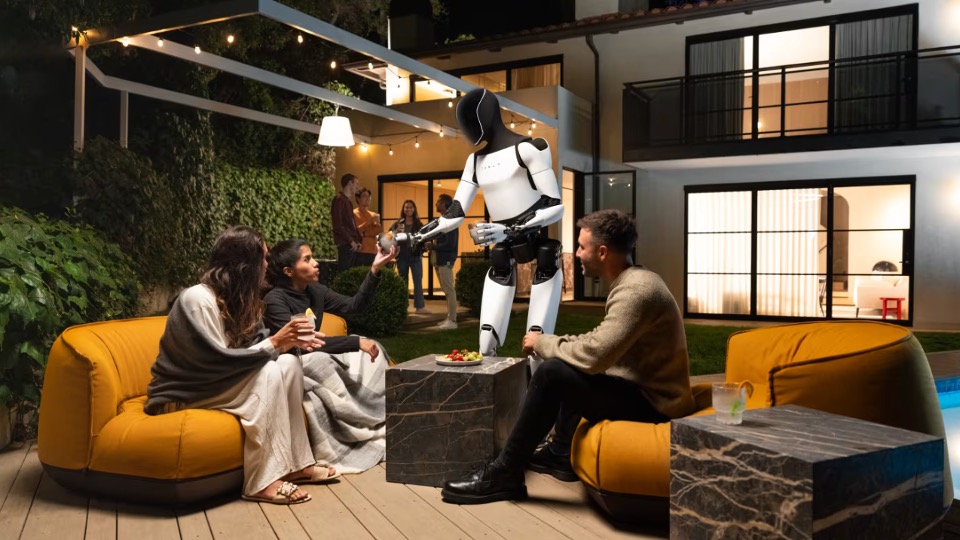
There were few updates on Optimus. Elon stuck with his previous script, saying that he believes it will be Tesla’s biggest product over time, but manufacturing is hard because there are so many new parts. That remains a long-term story, as in 2035 and beyond.

SpaceX

The question of a potential SpaceX-Tesla merger came up on the call, and I was surprised that Elon entertained it. He talked about the benefits between Tesla and SpaceX, including Starlink helping Robotaxi avoid connectivity dead zones. My odds of a Tesla-SpaceX combination went up after his comments. Previously, I put the odds of the combo at 80%. Today, I would say 90% over the next few years.

My bottom line: the selloff makes sense because margins disappointed. But the most important piece, the company’s progress in physical AI, is still moving in the right direction.

Disclaimer

Back To Top