
Skip to content
iPhone Lead Times: Latest Datapoint Continues to Point to Upside in FY26
Apple
We’re just one week into the iPhone 17 cycle, and investor sentiment is upbeat on the prospects of the iPhone returning to 5% growth in FY26. Early global lead time data reinforces this optimism: wait times suggest demand is running modestly ahead of expectations. Together, these datapoints support the case that iPhone unit growth will return next year, modestly exceeding consensus.

Key Takeaways

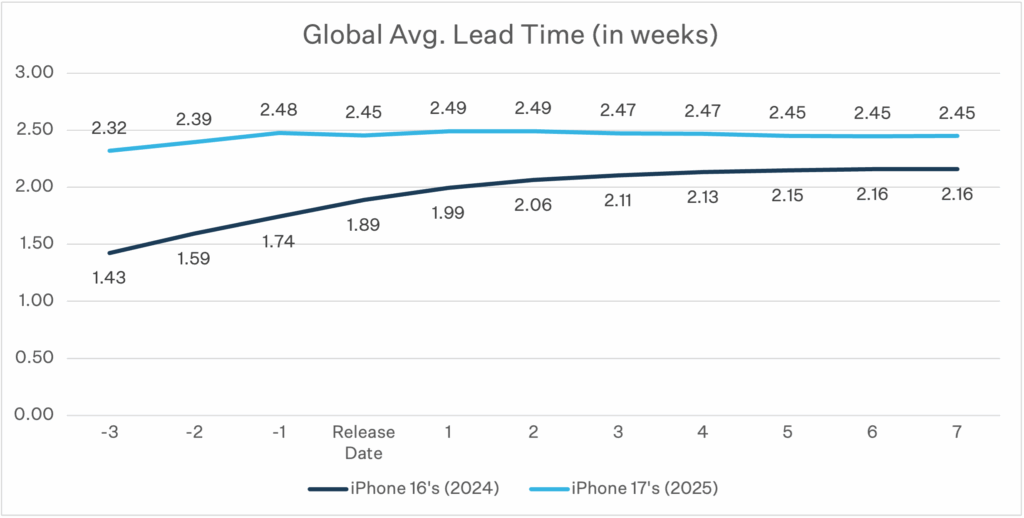
Average global lead times for the iPhone 17 launch are about 10% longer this year compared to last year. Going forward I expect the lead times to shorten given Apple is reportedly increasing supply by 30-40% of the base 17.
I expect September iPhone growth to come in at 9%, above the printed estimates but below the whisper, which should be more than outweighed by upbeat December guidance.
1

Lead Times

There’s a debate about the value of tracking lead times. After all, we don’t know how much supply there is, which makes it difficult to translate lead times into a measure of demand. That said, my observation over the past decade is that longer waits typically line up with stronger cycles.

The global snapshot compares favorably with last year. Three days ahead of launch, iPhone 17 average lead times were 2.32 weeks, while iPhone 16 tracked at 1.43 weeks in the same window. From release day to seven days after, iPhone 17 lead times inched up to 2.45 weeks, compared to iPhone 16 at 2.16 weeks. The bottom line is lead times this year are about 10% longer than last year.
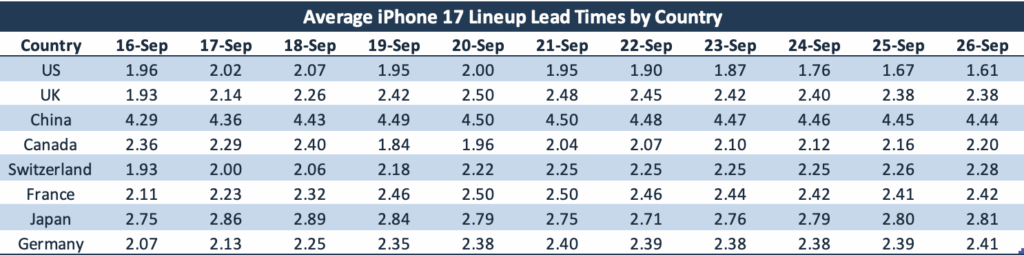
One dynamic that stood out in the country-level readings was that most countries were at around 2.5 weeks, while China was at 4.5 weeks. I don’t have a good explanation for the gap, especially since most of the phones are assembled in China.
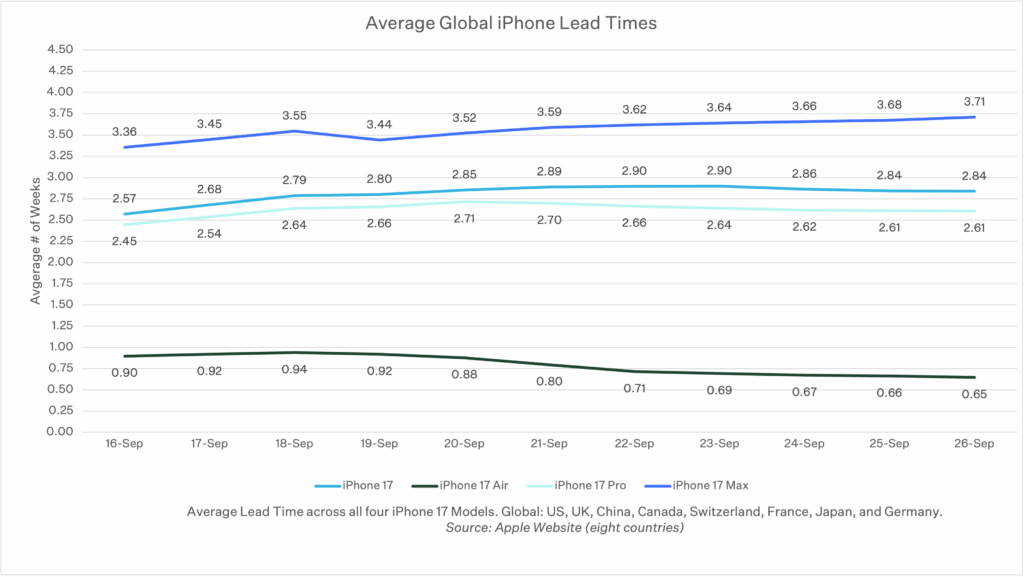
Where are lead times going from here? There will be some noise in the numbers if reports are accurate that Apple has asked suppliers to boost production of the entry level iPhone 17 by about 30–40%. If base-model output increases as reported, aggregate availability will improve and lead times should come down in the weeks ahead.

2

Implications for Estimates

The bottom line is that I expect a fractional miss on the September iPhone whisper number (its going up every day), but this will be more than offset by positive December guidance and estimates moving above the whisper for FY26.

At the end of August, the Street was expecting 6% iPhone growth for the September quarter (FactSet). Today, in print expectations have inched up to 7% y/y growth, while whisper numbers are likely closer to 10%, given that AAPL shares are up 10% since the end of August compared to a 4% gain in the Nasdaq.

In the end, I expect September to come in at 9% growth, above the printed estimates but below the whisper. Overall, I would consider that outcome good enough, since attention will likely shift to December guidance, which I expect to come in ahead of both the published estimates and the whisper number.

For the December quarter, the Street is currently expecting 7% growth, essentially unchanged from a month ago. I believe the whisper number has reached 9% annual growth. Apple likely will not give detailed iPhone guidance for December but will provide enough direction for investors to back into a growth rate. The bottom line is I expect the December iPhone revenue guide to be above 10%.”

For FY26, expectations call for 5% growth, compared to 4% last month. My sense is the whisper number for FY26 still hovers around the published 5% estimate, given the wide gap between the December quarter and the full year. In the end, I now expect FY26 growth to exceed 8%.

Disclaimer

Back To Top