
Skip to content
Apple Is on a Mission To Nail Siri
Apple
Apple’s AI strategy is becoming more clear. They’re taking a measured approach — they held off on announcing any big AI advancements, stoking concerns that Apple doesn’t get it. They get it, and they have elevated next year's release of a new, supercharged Siri as the critical test of their AI chops.

Key Takeaways

There's a lot riding on next year's release of Siri. If Apple delivers, the sky is the limit; if the new Siri falls flat, look out below.
WWDC 2025 marked a return to Apple’s preference for slow, deliberate evolution over the kind of rapid innovation that AI-first companies have shown.
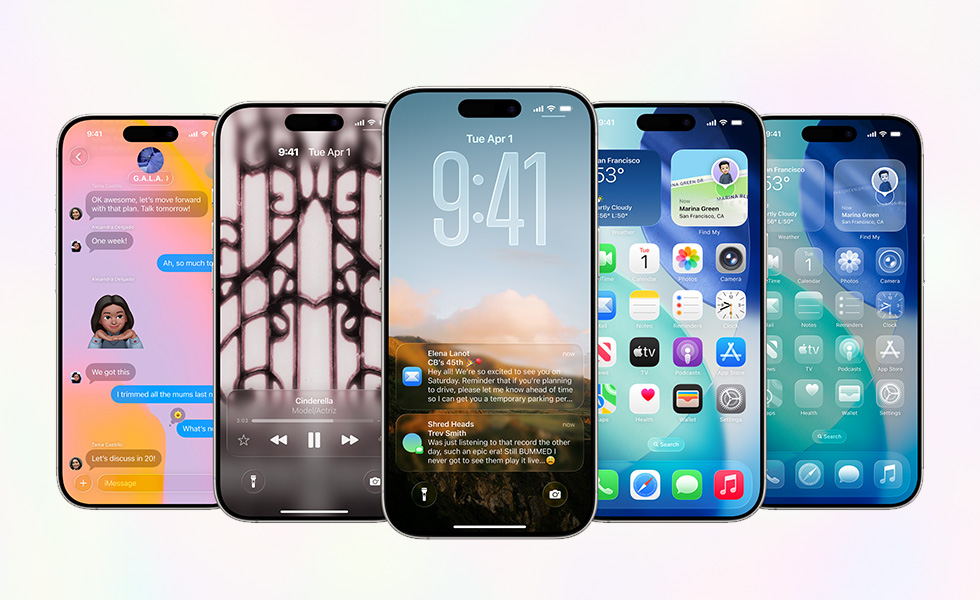
One WWDC highlight was a new universal user interface for all Apple devices, called Liquid Glass, signaling where Apple's competitive advantage truly lies.
Apple still has time to get AI right.
1

A New, AI-Supercharged Siri Is in the Works

Despite only mentioning Siri twice during Apple’s recent WWDC keynote, Siri was the most important topic.

Following WWDC, Apple’s Greg Joswiak and Craig Federighi have been on a mission: remind investors they’re playing a different game when it comes to AI. In recent interviews (WSJ, Tom’s Guide), Federighi has made it clear that Apple believes in the power of AI to shape the future:

“AI is a transformational technology… it’s going to have a decades-long arc of impact across the industry and the economy.” – Craig Federighi. SVP Software Engineering at Apple

Apple doesn’t want to compete directly with ChatGPT. They’re focused on pervasive AI throughout their products. That means your iPhone will be capable of more when using Apple Intelligence vs. ChatGPT. Next year’s delayed release of the new Siri will be Apple’s next big test in delivering on that vision.

Apple’s approach to AI is two-fold. First, keep making their world class hardware, software and services even better. Second, release a new version of Siri that begins to unlock pervasive AI experiences across Apple devices.

  • As for making world class hardware, software and services, investors can continue to sleep well at night knowing the company will keep doing just that.
  • As for releasing a world class Siri, investors will have some restless nights ahead given the product’s track record and the limited impact of Apple’s AI initiatives to date.

The big picture: what’s at stake goes beyond fixing Siri in 2026. The next version of Siri will set investors’ confidence level in Apple’s ability to capitalize on AI over the next few years. If they deliver, it sets the table for Apple to change how we use their devices over the next decade. If Siri falls short, it would be viewed as the second major AI failure for the company (the first was not getting Siri out in late 2024), and a sign that AI is not in the company’s DNA.

So there is a lot riding on the new Siri, and Joswiak and Federighi seem OK with that. Their confidence that they’ll get it right is reassuring.

2

Apple's AI Slow Play

The pace of innovation in AI is fast, setting the bar for how the world grades what comes out of WWDC. This year’s conference was a reminder that the Apple is approaching the AI transformation over the next five years on their terms.

With AI dominating headlines from companies like OpenAI and Google, Apple’s announcements felt modest by comparison. There were no sweeping paradigm shifts or bold foundation model reveals. Instead, Apple leaned into an all new user interface design and incremental Apple Intelligence features across its product line. Apple made it clear that they are focused on enhancing the user experience with AI within their existing ecosystem as the path for the company to break new ground.

Updates include live translation in Messages and FaceTime, predicting traffic on your daily commute, an AI workout buddy, combining two emoji into one, and more. In other words, these updates lack the punch that today’s consumers and investors are looking for, given AI’s breakthrough capabilities.

“Now, in addition to turning a text description into a Genmoji, you can mix together two emoji to create something new, like a sloth and a lightbulb, for that moment when you’re the last one in the group chat to get the joke.” – Leslie Ikemoto, Director Input Experience at Apple

As competitors like Google and OpenAI release new AI-driven products and services at a dizzying pace, WWDC felt like a slow, small step forward.

In terms of content for developers, Apple cut its developer-focused keynote time by more than half at WWDC 2025, dropping from over 6 minutes in 2024 to under 3 minutes this year. While last year’s keynote devoted around 7% of its runtime to new APIs, developer tools, and a direct message to the developer community, this year’s focused just 3% on similar topics. Last year was the unveiling of Apple Intelligence; the shift highlights a move toward consumer-facing features like design updates, with deeper technical content now pushed to breakout sessions and the State of the Union.

3

Tightening the Experience Between Devices

One highlight of WWDC was the debut of Liquid Glass, a new user interface design unifying Apple’s operating systems across devices for the first time. It’s simple, beautiful, and something only Apple, with tight integration of hardware and software, can pull off. This wasn’t just a visual refresh. It was another step forward in unifying Apple’s ecosystem across Mac, iPhone, iPad, Apple TV, Apple Watch, and Vision Pro.

In a year marked by Apple’s struggles to compete in the AI race, Liquid Glass shows where Apple excels. And it shows that Apple hasn’t forgotten where its true competitive advantage lies: a tightly integrated computing ecosystem that works better than any other.

4

Apple's AI Clock

Today’s Apple AI narrative: While Apple teased more AI announcements to come, many investors and developers were left wondering whether the company has the internal capabilities or philosophical alignment to compete in an AI-first world. Those concerned point to how Apple’s integrated, privacy centric model conflicts with the data hungry, cloud based needs of AI services looking to infuse LLMs into their products. Moreover, their quality bar, ship once perfect, is at odds with the rapid and iterative approach that OpenAI and others are taking to AI (an approach that hundreds of millions of ChatGPT users seem to like).

The narrative continues that Apple’s past struggles with cloud services like maps and search may foreshadow a future where Apple never quite gets AI right and must partner with key AI providers to enable those services on Apple devices. AI simply may not be within Apple’s core competency. Their struggles with cloud services, their emphasis on privacy and security, and their impossibly high quality bar may continue to haunt them. What makes AI great might be fundamentally misaligned with what makes Apple Apple.

What’s often  under appreciated in that narrative is that Apple has time — two to three years — to get AI right. Over the next year the focus will be on Siri. Beyond that, their loyal customer base, sticky ecosystem (1.7 devices and 1.5 services per user on average), and strong developer relationships will buy them time.

Disclaimer

Back To Top