
Skip to content
Vision Pro’s Exit Shows the Race to Build the Optimal AI-First Device Is Wide Open
Apple, Meta, Wearables
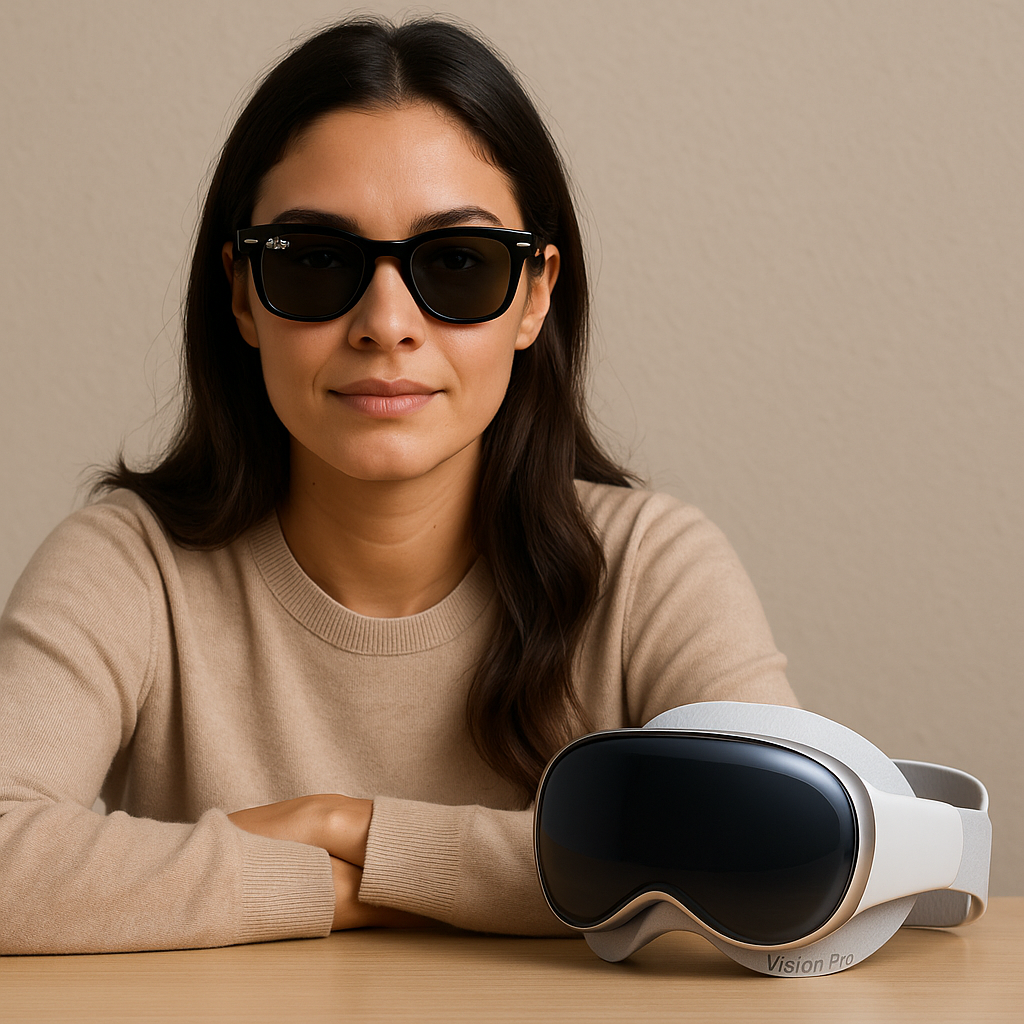
Apple’s decision to shelve Vision Pro in favor of glasses underscores that the optimal AI-first form factor is still unsettled. Apple is now following Meta’s push into glasses, while Jony Ive joined OpenAI in May to pursue a different path: a screenless pocket companion. I believe the phone will remain the dominant AI-first device over the next three years. Beyond that, the shift will move toward pocket companions that work alongside phones and watches. Glasses, despite Apple’s pivot, are likely capped at a few hundred million units a year, limited by comfort, privacy, and fashion.

Key Takeaways

Apple's product development has been in a funk, with Siri delayed and Vision Pro shelved in favor of glasses, a category I see topping out at a few hundred million units a year.
The smartphone will be the optimal consumer AI device for the next few years.
I trust Jony Ive's product vision and believe he’s onto something with a screenless AI device.
1

Apple’s Product Soul Searching Lands Them in Meta’s Camp

I’ve been researching and investing in Apple for a long time, and don’t remember a more memorable seven months when it comes to product development. In March, the company announced the new AI-powered Siri would be delayed for about a year. The last major software postponement was in April 2007 when Jobs announced a new Mac OS was delayed by four months as the company focused on finishing the software for the iPhone launch. In other words, the Siri delay was about three times as long as the Mac OS delay 18 years ago. This week’s reporting from Gurman that Apple has paused development of Vision Pro and redirected resources toward lighter, more wearable devices stands alone in modern Apple product development as a miss. Putting the two together, we get a sense of how hard it is to predict and productize where the world is going.

It’s easy to harp on Apple’s recent misfires given it is so out of character. What’s more constructive is to ask ourselves, does Apple have the right north star by going for glasses, and do they have the technical chops to get the job done and be a player in the market. Relative to Meta’s Ray-Ban glasses, Apple has meaningful advantages in retail, distribution, and integrating hardware, software, and services.

Some evidence that it’s hard: Meta’s latest glasses are sold in Best Buy stores but require Meta employees to staff the aisles. Apple, in contrast, has a global retail footprint and experience driving mass adoption of new categories. This advantage will help Apple, but the ceiling for glasses remains lower than phones or pocket devices.

Bottom line, I believe in the glasses race, Apple will win. Which begs the question, are glasses a form factor that can go mainstream, more than 500m units a year. Glasses face adoption constraints that did not exist for headphones or watches, including fashion, wearability, prescription complexity, and privacy. In other words, it’s asking a lot for people to wear something on their face. My take is even if Apple succeeds, this segment will cap at a few hundred million units annually, which is below the potential of phones or pocket companions.

2

Phones Remain the Near-Term Center of Gravity

While it lacks the sizzle that excites consumers, the phone is likely the optimal AI device for the next three to five years. It is already the most universal computing platform, with more than 6B in use and 1.3B sold annually. Phones remain unmatched in fast access to compute, contextual data, and portability. They’re sold through an established carrier channel that prompts a predictable upgrade cadence, which means most of the hardware in use is at most four years old.

Compared with earlier category shifts, such as the transition from MP3 players to smartphones, phones already meet the requirements of AI. The constraint is not the hardware itself but the user workflow, pulling out a phone, opening an app, and explaining context. This friction creates the opening for a dedicated AI-first device in the medium term.

The key metric to watch is latency as well as the ability of the device to take in the world with cameras and mics. On the latency side, phones are improving this with on-device models, but an AI companion could eliminate even more steps.

3

Pocket Companions Likely Represent the Optimal Next AI Device Category

I believe a pocket-sized AI device will in five plus years emerge as a winner. Its strengths are speed, ambient context, and a simpler privacy model compared to glasses. This device would not need to replace the phone but rather complement it.

Consumers will need a reason to carry an additional device, which was the same hurdle faced by Apple Watch, which took three years to gain traction. The Jony Ive device will first be shown off next year and volume production is expected in 2027. If pocket companions deliver speed, reliability, and privacy at scale, they could become the next great consumer hardware category.

Disclaimer

Back To Top