
Skip to content
Nvidia’s Investment Spree Aims to Capitalize on the Future of Work
Nvidia
Over the past two months, Nvidia has made five major investments totaling $15B in near-term commitments and $100B in long-term commitments. During that same period, the company has also invested in approximately seven private companies and established twelve new partnerships. In total, Nvidia has made about twenty-five strategic announcements. The common thread that ties them together: Jensen Huang’s belief that the future of work is shifting from tools to bots.

Key Takeaways

Nvidia recently made investments into Intel, OpenAI, CoreWeave, xAI, and Nokia totaling around $115B over the long term. While it's big money, Nvidia has more than enough operating profit to back it up.
The twelve partnerships announced over the past two months highlight Nvidia’s strategic intent to establish a leading presence in both mobility and quantum computing.
Nvidia is also backing some of the most sought-after AI startups in the market.
The big picture: Jensen is betting that the future of work will define AI’s ultimate utility.
1

Five Big Deals

Since Labor Day, Nvidia has been on an investment tear, making four direct investments totaling about $15B in near-term commitments, along with a tiered $100B commitment to OpenAI that will be deployed over the next five years. A common thread: Nvidia is purchasing 1% to 4% equity stakes in each of these companies. Here are the deals, in order of size, and my take on each:

1. Up to $100B investment in OpenAI (September 22)

My take: This is essentially Nvidia giving OpenAI money in tranches so OpenAI can buy Nvidia GPUs. Some critics argue it’s a shell game, a case of AI’s leading players inflating their own future revenues by funding their own customers. I see it differently. OpenAI’s revenue is projected to grow 100%+ annually for the next five years. I’d say they’re likely to hit that mark. This is very different from 25 years ago, when sky-high growth expectations weren’t backed by utility or real demand.

2. $6.3B cloud services purchase from CoreWeave (September)

My take: In substance, this is similar to the OpenAI deal, Nvidia commits capital to CoreWeave, which returns to Nvidia via GPU sales. But practically speaking, Nvidia is prepaying for cloud infrastructure to support its own internal AI workloads. Critics again call this circular, but Nvidia is on track to generate over $120B in operating income next year, so it’s hardly a stretch. Even if investors apply a discount or call it “non–arm’s length revenue,” the move is financially grounded.

3. $5B stake in Intel (September 18)

Nvidia acquired a 4% equity stake in Intel and announced that the two companies’ R&D teams will collaborate on future chip designs.
My take: This opens the door for Nvidia to expand its consumer-facing business, leveraging Intel’s deep reach in the PC and x86 ecosystem. It also signals Nvidia’s growing interest in co-developing silicon beyond GPUs.

4. $2B investment in xAI SPV (October 7)

This represents a 1% to 2% equity position in Elon Musk’s xAI. In return, xAI will purchase Nvidia GPUs for supercomputing and AI model training.
My take: Nvidia gives a fast-scaling customer capital to buy its hardware and picks up some equity along the way. This also strategically positions Nvidia in multiple foundational model ecosystems, not just OpenAI.

5. $1B stake in Nokia (October 28)

Nvidia took a ~3% equity stake in Nokia as part of a broader partnership on AI-driven telecom infrastructure.
My take: Nvidia is betting on 6G as a major tailwind. Faster wireless speeds will drive greater cloud usage and inference workloads, and that translates directly to more demand for Nvidia’s data center chips.

2

Partnerships

Of the twelve partnerships announced over the past two months, most of the attention has focused on the Oracle and Palantir deals.

My take on Oracle and Palantir: These are snoozers.

  • Oracle (October 29): Partnership to build the largest AI supercomputer for the U.S. Department of Energy.
    My take: Snooze.

  • Palantir (October 28): AI integration partnership for enterprise operations.
    My take: Snooze.

Mobility

My take: Jensen sees autonomy as central to the future of work, and Nvidia wants a seat at that table.

  • Hyundai (October 28, 2025): AI integration for automotive systems and smart factories.

  • Uber (October 28, 2025): Uber’s autonomous DRIVE platform will be powered by Nvidia GPUs, enabling mobility-as-a-service.

  • Stellantis & Foxconn (October 2025): Joint venture exploration for robotaxis.

  • Lucid & Mercedes-Benz (October 2025): Integration of Level 4 autonomy.
    Strategic rationale: Advances in self-driving technology.

Supply Chain

My take: This matters. Supply remains a bottleneck, and localizing the supply chain will help ease constraints.

  • Samsung (October 28, 2025): Chip and AI collaboration.
    Strategic rationale: Strengthens the semiconductor supply chain.

Quantum

My take: Jensen wants to push back on the narrative that quantum computing will make Nvidia’s chips obsolete. Nvidia’s partnerships with nearly all the leading quantum companies signal a clear intent: to bridge the gap between classical and quantum computing and ensure Nvidia plays a central role in that transition.

3

Startups

Over the past two months, Nvidia has either announced or it has been reported that they’ve invested in seven startups. In a recent interview on CNBC’s Squawk Box, Jensen Huang reiterated that he regrets not putting more money into these companies. I found his comments entertaining, as every VC can relate to the feeling of wishing they had doubled down on their winners.

A couple of the more notable recent startup investments:

  • Mistral AI (Series C): Estimated to be a sub-$100m investment. This marks Nvidia’s third investment in the French LLM developer. Rationale: Strengthens the open-source AI ecosystem with models that are highly compatible with Nvidia hardware.

  • ElevenLabs: Likely about $50m. ElevenLabs specializes in AI-driven voice synthesis. Rationale: A strategic bet on the future of AI-native applications like conversational agents, digital avatars, and synthetic media.

4

The Future of Work

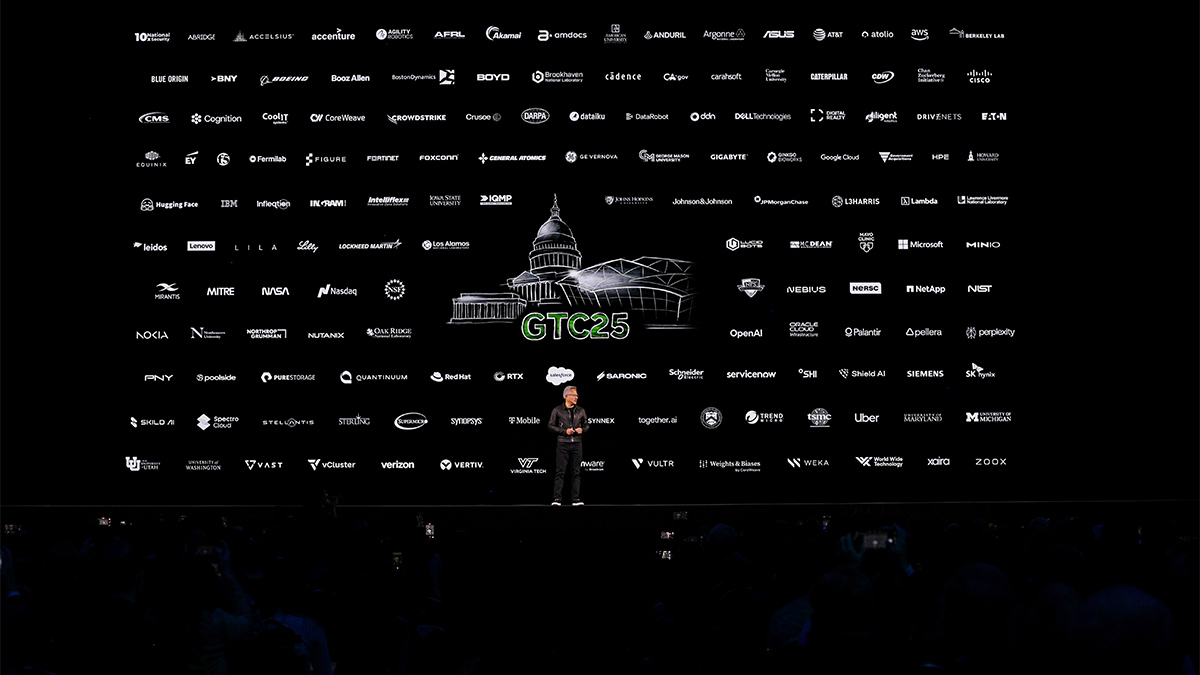
What stood out to me at last week’s GTC in D.C. were Jensen’s comments on the future of work.

He drew a clear distinction between the tools of the past and the work of the future. He said:

“The software industry of the past was about creating tools. Excel is a tool. Word is a tool. A web browser is a tool. The reason I know these are tools is because you use them.

The tools industry, just like screwdrivers and hammers, is only so large. In the case of IT tools — database tools, for example — the total market is about a trillion dollars or so.

But AI is not a tool. AI is work. That is the profound difference. AI is, in fact, workers that can actually use tools.”

If he’s right, it means the substance of AI will ultimately exceed the hype — and more than justify the $125 billion-plus in external investments Nvidia is making to bring that future to life.

Disclaimer

Back To Top